
| Government funding is being directed towards revitalising high streets, bringing vacant properties back into productive community use | The logistics sector continues to perform strongly, supported by investment demand and ongoing requirements for high-quality warehouse space | Garden centres remain a resilient retail success story, attracting significant visitor numbers and contributing billions to the UK economy |
Reviving the high street
The government has pledged to help boost local high streets as part of a £210m funding package.
Prime Minister Andy Burnham announced a £125m Derelict Buildings Fund, supporting local authorities to transform derelict high street buildings into shared workspaces, cafes and community hubs. Speaking at the Labour Party Conference, Burnham said, “Too many high streets have been left to hollow out, leaving town centres a shell of what they once were. That must change, and today’s funding will help put power back into the hands of locals who know their area best.”
An additional £65m will be invested in helping communities revamp buildings and businesses at risk of closing down, such as sports clubs and pubs. A further £10m will go towards High Street Rental Auctions, allowing local leaders to auction off premises which have been vacant for 12 months or more. Another £10m will be invested in a new Co-operative Development Programme.
UK logistics market update
The logistics market recorded investment of £2.6bn in Q3, according to Knight Frank, making it the strongest quarter so far this year.
Private equity accounted for the majority of investment in 2026 (34%), followed by institutional investors (31%). In Q3, occupier take-up totalled 9.1 million sq. ft, taking the year-to-date total to 28.8 million sq. ft. Over half (54%) of take-up in 2026 is attributed to Grade A, new or refurbished space, followed by second-hand Grade B or lower-quality space at 38%. The overall vacancy rate has increased from 7.5% at the end of 2025 to 8.1% at the end of Q3.
So far this year, approximately 10.1 million sq. ft of industrial and logistics space has been completed. Total development output is projected to reach 18.4 million sq. ft by the end of 2026, which is above the 16.4 million sq. ft completed last year but below levels recorded in 2021-23.
Spotlighting the UK’s garden centres
A report from Savills has shown that garden centres make a positive contribution to the economy.
Gardening contributes £38bn to UK GDP, with £5.7bn of this coming from garden retail. Households are estimated to spend a total of £9bn on garden retail annually, while garden centres attract 200 million visits every year. There are currently between 1,500 and 2,300 garden centres and retail nurseries in the UK, most of which are owned by individual independent operators. However, many of the larger garden centres are owned by groups. The Top 10 operators own about 310 sites between them, with British Garden Centres accounting for the most at 80 sites, having acquired 20 since 2022.
Tom Whittington, Director of Commercial Research at Savills, commented, “Despite ongoing summer heatwaves, July saw a boost in garden centre sales, at the same time that other retail environments saw falls in footfall by as much as -6%.”
12-month capital value expectations across mainstream sectors
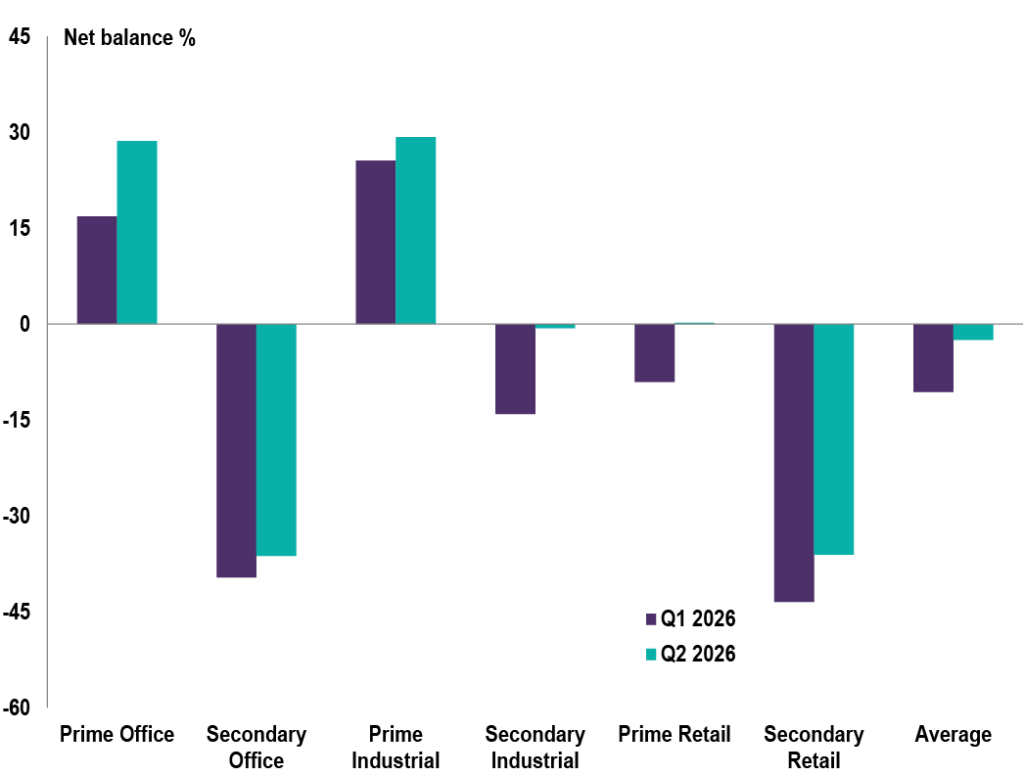
- Capital value expectations remain comfortably positive for prime offices and industries at +29% for both sectors
- Projections for capital values remain broadly flat for prime retail and secondary industrial assets
- Respondents continue to anticipate declines in secondary office and retail values.
12-month rent expectations across mainstream sectors
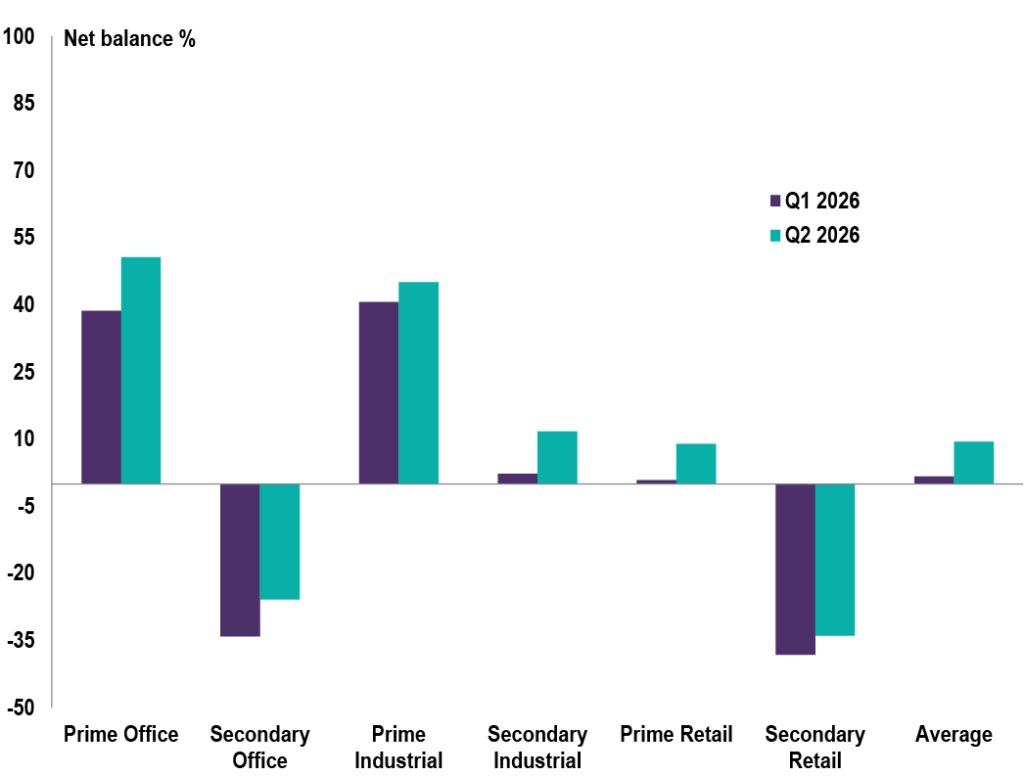
- Prime offices exhibit the strongest retail growth expectations, with a net balance of +51% up from +39% previously
- A net balance of +45% of respondents expects prime industrial rents to increase over the next twelve months, up from +41% in the previous quarter
- Secondary industrial rents are expected to rise over the coming year, with a net balance of +12% of respondents anticipating growth.
A cooling Scottish market
Investment in the Scottish commercial property market cooled slightly in quarter two, according to figures from CoStar.
The Scottish market saw £467.7m investment in Q2 of this year, which is 13% less than the previous quarter and 29% lower than the year before. This reflects a slowdown in larger retail and portfolio transactions after a particularly active 2025.
Industrial property showed the most resilience out of the sectors, recording £75.1m in investment in Q2, which is only slightly lower than £79.9m seen the year before. Meanwhile, retail investment saw a significant drop, falling from £123.3m in Q2 2025 to £51.7m this year. Hotels were boosted by the £100m sale of Cameron House to Victory Group, which marks one of the largest hospitality transactions seen by the Scottish commercial property market in recent years. Offices, healthcare and alternative assets were active too, accounting for nearly half of investment activity in Q2.
(All details are correct at the time of writing 21/10/26)